Our newest product is dropping soon
Sign up for early access to our latest derm-created, 100% clinically-proven innovation. Shop before everyone else on Sunday, 9/15.

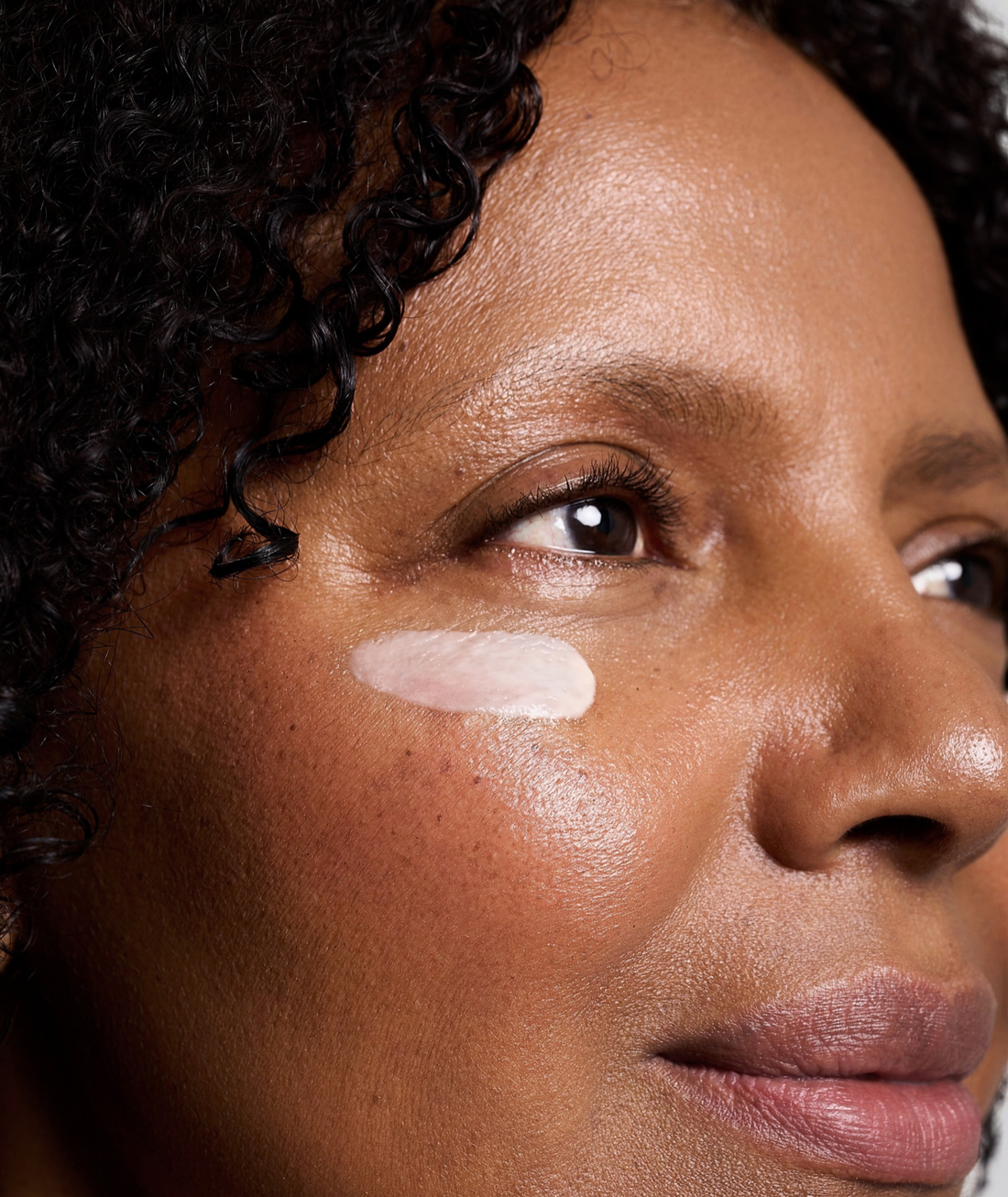
If there is one area my patients ask me about more than others, it’s the skin around their eyes.
“Why do my eyes look tired even when I’m rested?” “Can an eye cream actually improve crepey skin? What about dark circles, crow’s feet, puffiness, or heavy upper lids?”
I’m hearing, and seeing, these concerns even more as GLP-1 use has increased. Significant weight loss, regardless of how it’s achieved, can affect overall facial volume and make under-eye hollowing and shadows more noticeable (1).
The eye area is one of the first places to show visible signs of aging (2). You can improve your youthful eye appearance with the right eye cream, but not even the best skincare formulations can fix certain underlying concerns.
While it’s a category with a credibility problem, an eye cream can be an excellent addition to your skincare routine. Let’s break down what an eye cream can realistically improve, and how to choose the right formula for your concerns.
The skin around your eyes is among the thinnest on your body (3, 4). Because it is so thin and provides little camouflage, blood vessels, muscle, and age-related changes beneath the surface can become more visible.
The eye area is also:
All of this helps explain why fine lines, crepey texture, dark circles, puffiness, hollowing, and skin laxity often appear around the eyes first.
Common signs of eye aging:
Yes, but it depends, in part, on what is causing the concern.
Many of my patients ask me if they really need an eye cream, or is it just a “glorified moisturizer” in an expensive jar. I always say that if you need more than hydration, if you are targeting specific signs of eye aging, look for a proven formula developed specifically for the delicate eye area to address those concerns.
But results take time, and no eye cream can address everything alone. Here’s what eye cream can and can’t do.
What an eye cream CAN do: when demonstrated through final formula clinical testing, an eye cream can help improve:
What an eye cream CANNOT fully correct:
Let's take a closer look at each of these categories.
Certain clinically tested eye creams can visibly improve fine lines, crepey texture, firmness, and mild upper-lid sagging.
Signaling peptides and specific bioengineered vesicle technologies may visibly support skin quality and collagen-related pathways over time. Wrinkle-relaxing peptides can help soften the appearance of dynamic lines caused by smiling and squinting.
Of course, topical skincare can’t remove significant excess skin or correct true eyelid ptosis. For the best results, I often recommend a multimodal approach that combines clinically tested skincare with in-office treatments when appropriate.
Dark circles can be caused by pigment, visible blood vessels, puffiness, hollowing, or a combination of these factors (7).
Caffeine, a vasoconstrictor, can temporarily improve the appearance of dark circles and fluid-related puffiness. A clinically-tested formula containing brightening antioxidants such as vitamin C or astaxanthin may improve visible discoloration over time.
True under-eye bags are different. They are often caused by orbital fat pushing forward, and an eye cream cannot shrink or remove those fat pads (4). Instant-tightening products may temporarily contract as they dry, but that is a short-term cosmetic effect, not a long-term structural change.
Eye cream cannot replace lost volume or change the underlying anatomy creating a hollow.
It can improve the hydration, texture, and overall quality of the skin overlying that hollow. But if volume loss is the primary concern, an experienced provider may recommend an in-office option based on your individual anatomy.
Milia are tiny, keratin-filled cysts that commonly appear around the eyes (8). Retinoids may be used in the management of some milia by supporting cell turnover, but they can also be difficult to tolerate near the eyelids, and should be carefully used in this area.
If you are prone to milia, look for a lightweight formula rather than a rich, occlusive cream, and one that is non-comedogenic. Existing milia may require professional extraction.
It depends on the concern and the formula.
Hydration and temporary plumping may be visible immediately, especially with ingredients like hyaluronic acid and polyglutamic acid, while improvements in pigmentation, fine lines, texture, and firmness generally require consistent use over several weeks or longer.
Look for the clinical study design on the finished formula, clinically tested results are typically over 4-12 weeks.
Start with your primary concern, then look for a formula designed and clinically tested to address it. An impressive ingredient list is not enough. What matters is whether the complete formula delivers a real, measurable result.
Above all, the formula should be appropriate for the delicate eye area and tested for tolerability.
Eye cream is not useless or “made up”—while it’s also not surgery in a jar, no skincare product is, it can be a great complement to the results of certain in-office procedures, like Botox®.
The right formula can meaningfully improve hydration, crepey texture, fine lines, certain types of dark circles, temporary puffiness, and visible firmness.
What it cannot do is replace lost volume, remove herniated fat pads, or correct significant excess skin.
The most important step is understanding what is actually causing your concern. Once you know that, you can choose the right skincare ingredients, in the right formula, and consider when an in-office treatment may be the better tool with your practicing physician.
Experience what a clinically-proven, dermatologist-created formula can do. Try our NEW Exo-Plex™ Collagen Renewal Eye Cream™.
Written by Dr. Whitney Bowe, board-certified dermatologist and founder + CEO of Dr. Whitney Bowe Beauty.
Disclosure: This information is for educational and informational purposes. It is not intended to diagnose, treat, cure, or prevent disease or medical condition. All product recommendations are intended for cosmetic purposes only and are not a substitute for medical advice. Always consult with a qualified healthcare professional or dermatologist regarding any concerns about your skin, health, or treatment options. Individual results may vary.


