Our newest product is dropping soon
Sign up for early access to our latest derm-created, 100% clinically-proven innovation. Shop before everyone else on Sunday, 9/15.

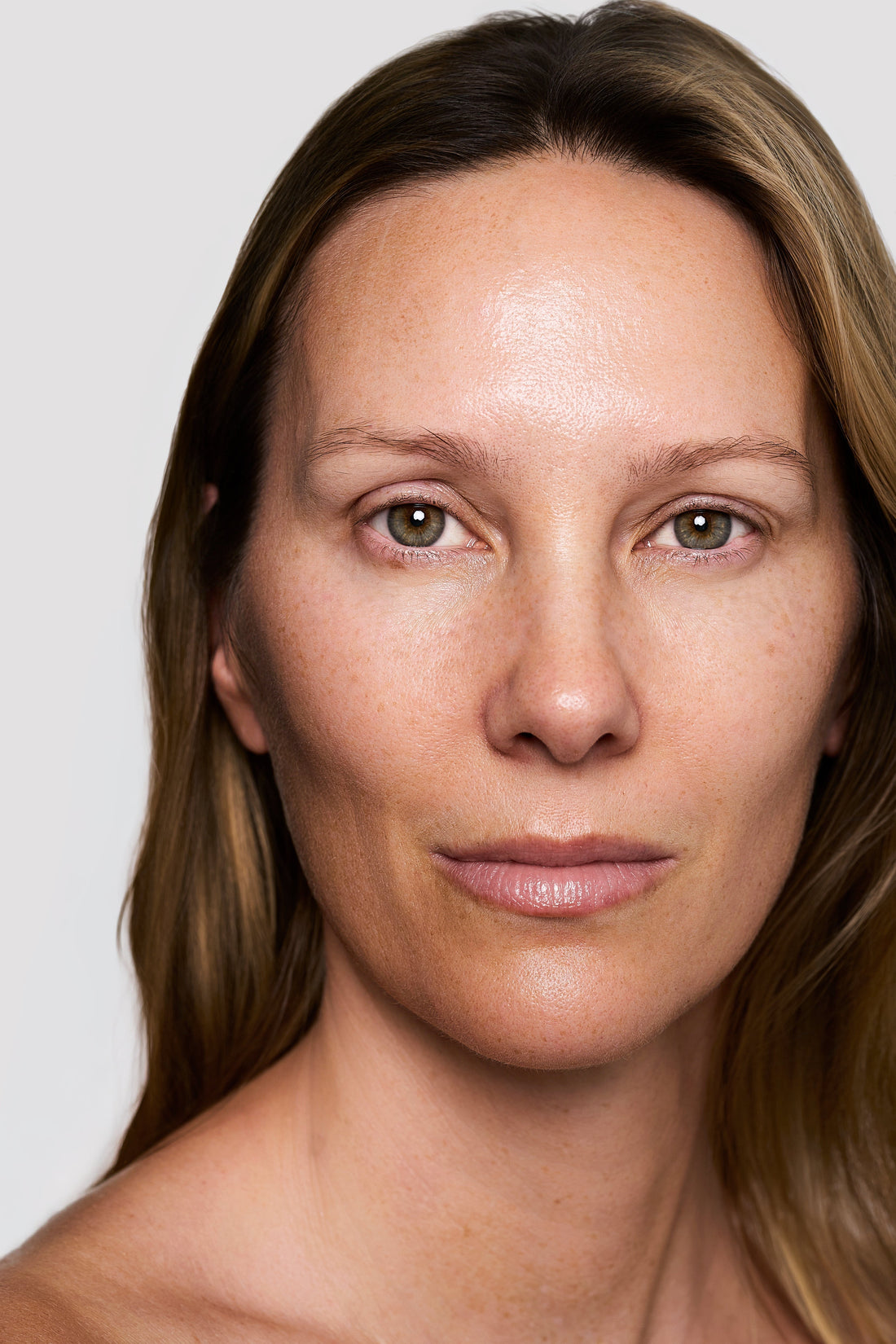
Over the last year, at least a third of my patients have started a GLP-1 medication. Some are taking Ozempic or Wegovy, others Mounjaro or Zepbound. And while I’ve witnessed noticeable facial changes in many of these patients—and we’ve had very open discussions about how to address those changes if they find them bothersome—the experience is certainly not universal.
Not everyone taking a GLP-1 develops what has become known as “Ozempic face.”
“Ozempic face” is a non-medical term used to describe facial volume loss, hollowing, and more visible skin laxity that may accompany significant or rapid weight loss. It is not unique to Ozempic and can occur with weight loss associated with other GLP-1 medications, or with substantial weight loss more generally.
So, is it the medication itself, or simply a consequence of losing weight? And if you’re starting a GLP-1, are there steps you can take to support healthy-looking skin along the way?
Let’s get into it.
There’s a famous quote attributed to Catherine Deneuve:
“At a certain age, you have to choose between your face and your ass.”
There’s actually some anatomy behind that sentiment.
Even relatively modest changes in facial fat can make the face appear more hollow, tired or aged—something that becomes particularly noticeable as we get older.
Many of my patients are thrilled to fit back into their favorite jeans after starting a GLP-1, but they’re less thrilled with what they see in the mirror. I hear things like, “I feel like I suddenly look older,” or, “People keep telling me I look tired, even when I slept really well.”
The one I hear the MOST often? “I think I’m starting to see jowls. Everything feels like it’s sagging.”
“Ozempic face” can look different from person to person. The most commonly reported or observed changes include:
Temporal hollowing: Loss of volume around the temples, which can make the upper face appear narrower or more angular. I've actually had more than one patient refer to this as developing a “peanut head”—apparently, that's a thing!
Under-eye hollowing: loss of volume beneath the eyes, which can create shadows and a more tired appearance.
Flatter or more hollow cheeks: Instead of smooth, youthful contours over the cheekbones, the face can begin to look more angular or “deflated.”
More visible jowls and skin laxity: As facial volume decreases, the overlying skin may have less structural support, making laxity around the jawline and neck more apparent.
More visible lines and crepey texture: Changes in facial volume can make existing lines and textural changes appear more pronounced, particularly alongside hormonal changes, cumulative UV exposure and normal aging.
GLP-1 receptor agonists mimic the action of a hormone naturally released in your gut after you eat. These medications act on receptors throughout the body and can reduce appetite, slow digestion, and help regulate blood sugar (1).
But the science doesn’t end there. Here's where things get interesting from a dermatologist's perspective: scientists are investigating how GLP-1 signaling may also interact with cells involved in skin and fat biology (2).
The short answer: current evidence suggests that significant weight loss—and potentially the speed and amount of that weight loss—is the primary driver of these visible facial changes (3). The phenomenon is not exclusive to Ozempic or even to GLP-1 medications. Researchers are still investigating whether GLP-1 medications could have additional effects on facial fat or skin biology independent of weight loss(7).
Your facial fat isn't one continuous layer. It exists in distinct superficial and deep compartments (4), and relatively small changes in certain compartments can have an outsized impact on how your face looks.
What we know:
Significant weight loss can reduce facial volume and make laxity, hollows, and other signs of aging more apparent (3,5,6).
The greater the weight loss, the more noticeable these changes may be (5).
These changes are not unique to GLP-1 medications and can occur after substantial weight loss more generally.
What we're still investigating:
Whether GLP-1 medications have additional effects on adipose-derived stem cells, fibroblasts, or other aspects of skin biology that contribute to these changes independently of weight loss (7).
There is currently no skincare product, supplement or strategy proven to prevent “Ozempic face.” Genetics, age, baseline facial structure and the amount of weight lost may all influence how the face changes.
However, there are evidence-based ways to support overall health, preserve lean mass and care for your skin throughout the process.
Discuss the pace of your weight loss with your treating physician: GLP-1 dosing and titration should always be individualized and managed by your prescriber. If you are losing weight very quickly, struggling to eat a nutrient-dense diet or experiencing persistent side effects, speak with your physician before making any changes.
Prioritize protein and resistance training: A protein- and nutrient-dense diet paired with resistance training can help preserve lean mass during weight loss (8).
Consider oral collagen peptides as an adjunct: Oral collagen peptides may offer modest benefits for skin hydration and elasticity, but they should only be considered an adjunct to—not a replacement for—a nutritious, protein-rich diet (9).
Skincare cannot replace lost facial volume, but the right routine can improve hydration and support visibly smoother, firmer and more resilient-looking skin.
I recommend looking for:
A peptide and hyaluronic acid serum, like our award-winning P46™ Peptide + Hyaluronic Plumping Serum, to immediately improve hydration while visibly plumping and lifting over time.
A targeted eye cream with peptides and technology specifically designed for the delicate eye are, with results proven to address visible concerns such as crepey texture, loss of firmness, and dark circles
A retinoid, like Retinal Night™ Advanced 0.1% Retinal Firming Treatment, to visibly improve texture, fine lines, wrinkles, and firmness.
An antioxidant-rich vitamin C serum, like Asta C™ Vitamin C Age Defense Serum, to help defend against oxidative stress while visibly brightening skin.
Daily broad-spectrum sunscreen, one of the most important steps for protecting your skin from UV damage and helping to preserve the appearance of collagen.
I always suggest taking a 3D approach that includes nutrition, exercise, sleep, stress management, and sun protection.
In-office treatments are certainly not a requirement. But if facial changes bother you and procedures are within your budget, consult a qualified, board-certified dermatologist or plastic surgeon about the most appropriate options for your specific anatomy and goals.
These are some of the in-office procedures I recommend to my patients to support them on their weight loss journey:
Sculptra: a biostimulatory injectable that helps stimulate your skin’s natural collagen product that works by stimulating your own fibroblasts.
PRFM gel filler: A treatment that uses components of your own blood to create a gel-like injectable.
Sofwave: an ultrasound treatment designed to stimulate collagen and improve the appearance of skin laxity.
Microneedling plus PRP: A procedure that combines controlled micro-injuries with platelet-rich plasma to support skin renewal.
Fraxel laser resurfacing: A fractional laser treatment used to improve overall skin texture and quality.
CO2 laser resurfacing: A more intensive resurfacing option for deeper wrinkles and textural changes.
For now, my approach is simple: lose weight under appropriate medical supervision, prioritize protein and resistance training, protect your skin from UV damage, and use skincare ingredients with real evidence behind them and consider in-office procedures that boost collagen but only if budget allows.
Everyone is different and experiences different changes. The goal is to feel the best version of you, inside and out.
Written by Dr. Whitney Bowe, board-certified dermatologist and founder of Dr. Whitney Bowe Beauty
Disclosure: This information is for educational and informational purposes. It is not intended to diagnose, treat, cure, or prevent disease or medical condition. All product recommendations are intended for cosmetic purposes only and are not a substitute for medical advice. Always consult with a qualified healthcare professional or dermatologist regarding any concerns about your skin, health, or treatment options. Individual results may vary.
References
Drucker DJ. Mechanisms of Action and Therapeutic Application of Glucagon-like Peptide-1. Cell Metab. 2018 Apr 3;27(4):740-756. doi: 10.1016/j.cmet.2018.03.001. PMID: 29617641.
Žaliukaitė G, Lebbar N. Effects of Glucagon-like Peptide-1 Receptor Agonists on Skin Homeostasis and Skin Aging Processes. J Clin Med. 2026 Apr 13;15(8):2944. doi: 10.3390/jcm15082944. PMID: 42074746; PMCID: PMC13116968.
Ridha Z, Fabi SG, Zubar R, Dayan SH. Decoding the Implications of Glucagon-like Peptide-1 Receptor Agonists on Accelerated Facial and Skin Aging. Aesthet Surg J. 2024 Oct 15;44(11):NP809-NP818. doi: 10.1093/asj/sjae132. Erratum in: Aesthet Surg J. 2025 Jun 16;45(7):754. doi: 10.1093/asj/sjaf039. PMID: 38874170.
Rohrich RJ, Pessa JE. The fat compartments of the face: anatomy and clinical implications for cosmetic surgery. Plast Reconstr Surg. 2007 Jun;119(7):2219-2227. doi: 10.1097/01.prs.0000265403.66886.54. PMID: 17519724.
Sharma RK, Vittetoe KL, Barna AJ, et al. Radiographic midfacial volume changes in patients on GLP-1 agonists. Otolaryngology–Head and Neck Surgery. 2025;173(2):360-366. doi:10.1002/ohn.1209. PMID: 40407186.
Jafar AB, Jacob J, Kao WK, Ho T. Soft Tissue Facial Changes Following Massive Weight Loss Secondary to Medical and Surgical Bariatric Interventions: A Systematic Review. Aesthet Surg J Open Forum. 2024;6:ojae069. doi:10.1093/asjof/ojae069. PMID: 39346804.
Paschou IA, Sali E, Paschou SA, Tsamis KI, Peppa M, Psaltopoulou T, Nicolaidou E, Stratigos AJ. GLP-1RA and the possible skin aging. Endocrine. 2025 Sep;89(3):680-685. doi: 10.1007/s12020-025-04293-w. Epub 2025 Jun 11. PMID: 40498168; PMCID: PMC12370548.
Arslan S. Medical nutrition in the glucagon-like peptide-1 (GLP-1) era: Protein strategies, micronutrient monitoring, and lean mass preservation. Clin Nutr ESPEN. 2026 Jun;73:103305. doi: 10.1016/j.clnesp.2026.103305. Epub 2026 Apr 24. PMID: 42036071.
Pu SY, Huang YL, Pu CM, Kang YN, Hoang KD, Chen KH, Chen C. Effects of Oral Collagen for Skin Anti-Aging: A Systematic Review and Meta-Analysis. Nutrients. 2023 Apr 26;15(9):2080. doi: 10.3390/nu15092080. PMID: 37432180; PMCID: PMC10180699.


